

In this blog, Dea Tsartsidze and Richard Smith share personal highlights – as a participant and organizer, respectively – from the 2025 Learning Lab organised by the Outcome Mapping Learning Community (OMLC) and partners on the theme Enhancing participatory, learning-oriented MEL in an age of bricolage.
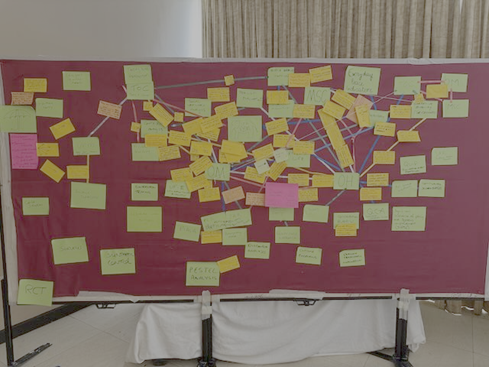
Figure 1: Making sense of complementarities and redundancies between methodologies
Dea Tsartsidze
I don’t say this often. In fact, I’m more likely to leave professional gatherings feeling disappointed than excited. But three days with 60 evaluators from 28 countries genuinely changed how I think about what we do.
The theme of the Learning Lab was bricolage – a French word for the art of creating something new from whatever lies at hand. In evaluation, there is no fixed definition of ‘bricolage’, but we understood it to be the practice of intentionally combining and adapting methods to fit context rather than forcing context to fit methods.
I arrived at the Lab thinking I was practicing bricolage, having spent fifteen years working across many countries and contexts, designing evaluations to answer questions that are rarely straightforward by experimenting with Outcome Harvesting, Contribution Analysis, Realist Evaluation, and other complexity-aware approaches. What the Lab revealed was something deeper: most of us combine methods, but combining is not bricolage. Bricolage starts with a harder question – why this method, what can it allow you to see, what can you still not see, and what are you doing about that?
The uncomfortable question
Do we choose methods because they fit the question or because they protect us? Because they signal competence to commissioners, fit what donors recognise, or reflect the training we’ve built our professional identity around?
The Lab asked us to sit with a harder version of this: what if the methods we’re most confident in are also the ones most likely to mislead us? Every method has a blind spot, and our attachment to it means we often don’t look there. This is where bricolage becomes essential – not “anything goes”, but a discipline of intentional choice. As Tom Aston and Marina Apgar argue in The Art and Craft of Bricolage in Evaluation, it requires being intentional about why we combine methods and how we protect, or better, enhance quality when we do. The question it demands we ask: what can this method surface, and what will it inherently miss?
Finding the sweet spot
The challenge, and this came through strongly in our discussions, is finding the sweet spot between building “Frankenstein designs” where everything goes, and rigid best-practice guides that hinder creativity and contextual responsiveness. Bricolage sits in that productive tension: structured enough to be credible, flexible enough to be useful.
What the Lab surfaced was a harder question about rigour itself. When evaluators talk about rigour, we often mean reproducibility and defensibility, but in complex programmes, these criteria can work against the very learning we are supposed to enable. Real rigour means something different: generating understanding that is credible, useful, and respects the people and contexts we are evaluating. That is what makes findings trusted and used.
Dea’s takeaways
I came to the Learning Lab to share my experience. I did but left with more questions than answers which, I’ve come to believe, is exactly how it should be. Three things stay with me:
- Methods should adapt to reality, not the other way around. Bricolage gives us permission and responsibility to design for what the context actually demands, not what we know how to defend.
- Honest evaluation means questioning our own approaches. In complexity, choosing a method because it feels safe produces false confidence, not rigour.
- We need spaces where evaluators can say “I don’t know,” talk about what didn’t work, and wrestle with methodological dilemmas together, not only panels where we present polished successes or blame external constraints. Some exist, but we need more to keep challenging ourselves.
Richard Smith
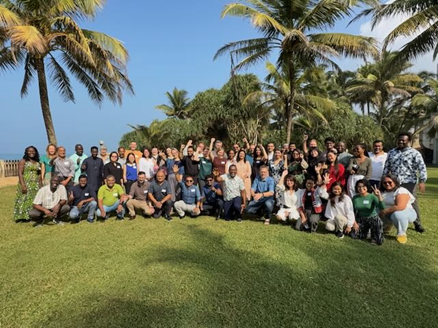
Figure 2: Participants at the OMLC Learning Lab 2025
From Rimini to Waskaduwa
The dream of a Learning Lab on ‘OM in an age of bricolage’ began at the 2024 EES conference as I took the evening air with Marina Apgar, organiser of a ‘solutions focused workshop’ on bricolage that I had just been a panellist in.
Fellow OMLC board members immediately jumped at the idea. The theme resonated with how OM has so often been practiced, not as a method with all its steps, but with steps skipped or substituted, or with its core philosophy integrated in evaluations as way of thinking about how change happens in systems through multiple contributions to behaviour changes. After months of work, the Lab became a reality in Waskaduwa, in Sri Lanka.
Fears and hopes
My hopes were simple: that those who ask good questions ‘isn’t bricolage just mixed methods?’ or come to the topic thinking it is ‘old wine in new bottles’ would be intrigued to help make sense of what it means to be explicitly intentional when combining methods, and that evaluators, confident in a method or two but overwhelmed by the seemingly limitless options, would find or better still help create answers to their challenges.
My hopes for a successful event took off when several leading method and systems thinking experts agreed to help Lab participants prepare by hosting online sessions ahead of the event.
On a different level, I hoped for an enjoyable and productive event, one that would go some way to justifying the travel-related carbon emissions.
On all counts, I was not disappointed! None of us could have anticipated the energy and creativity sparked by no less than 15 volunteer facilitators and a wonderfully diverse group of participants thinking beyond single methods.
Richard’s takeaways
- It’s easy to be overwhelmed by bricolage. How can anyone know the optimal combination of thinking and tools from across the methodological universe to respond to differing values, views on rigour and causality, evidence and knowledge itself? Tom Aston’s response on this in Sri Lanka is something I carry with me: “Start from where you are…use what you know.”
- Guidance to support bricolage design processes would be helpful for commissioners and MEL practitioners alike. A promising option is the Inclusive Rigour canvas.
- We need more safe spaces where MEL practitioners can be vulnerable! I lost count of the number of participants who shared how they felt safe to publicly question their own practice / choices / reasons for methodological combinations / the meaningfulness of participation in their MEL practice. One option for creating such spaces is gamification of learning – thank you Mahesh Krishnan Ramesh for this inspiration.
More
For Lab outputs and more on bricolage, keep an eye on the OMLC bricolage resources page.
Authors
Dea Tsartsidze, HubEVAL, Department of Public Administration at the University of Georgia, & co-founder of Solution Alternatives International (SAI) https://www.linkedin.com/in/deatsartsidze/
Richard Smith, PhD, Independent Consultant, located in the UK, co-founder of the Outcome Harvesting Training Team, and board member of the Outcome Mapping Learning Community. https://www.linkedin.com/in/rdsmith27/